Navigating Certification Pathways for Innovative Table Game Variants in Regulated Nordic Markets
Mia Neumann · Nov 1, 2026
Navigating Certification Pathways for Innovative Table Game Variants in Regulated Nordic Markets
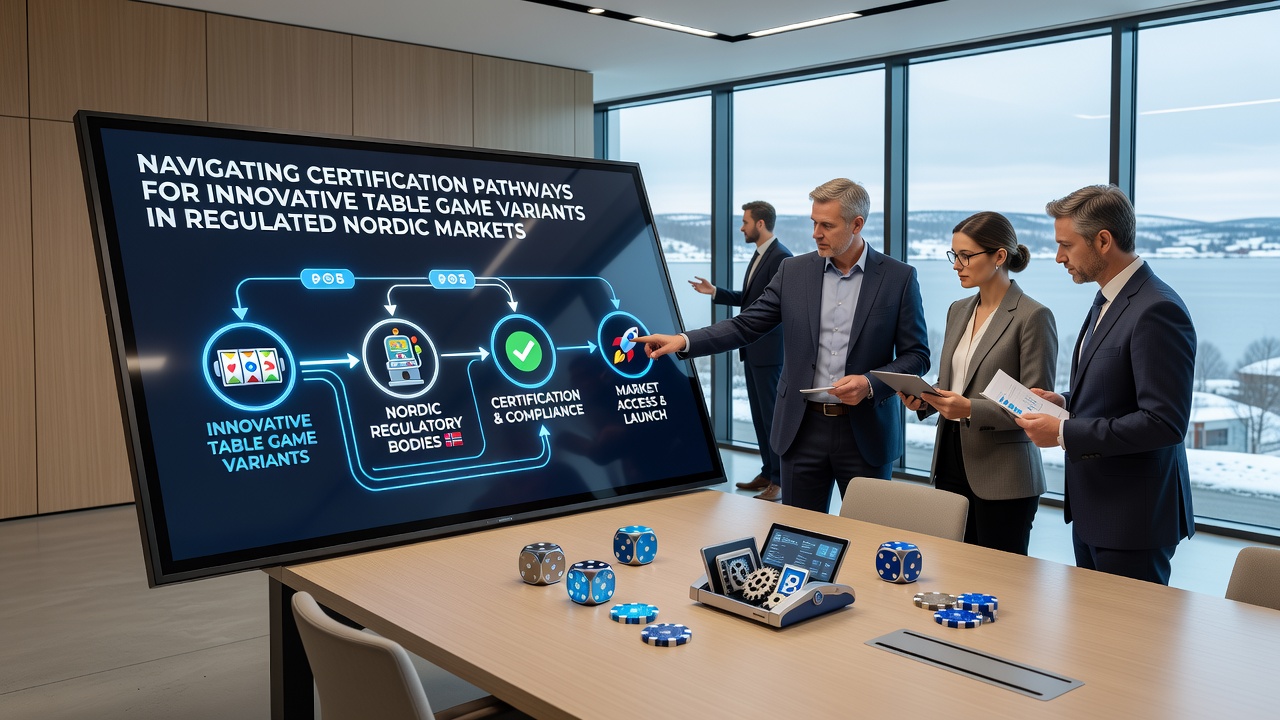
Regulated Nordic markets maintain structured frameworks that operators must follow when introducing new table game variants, and those pathways combine technical testing with regulatory review across Sweden, Denmark, Norway, and Finland. Authorities require each variant to demonstrate compliance with fairness standards, random number generation protocols, and local definitions of permitted games before any commercial deployment can occur. Observers note that the process often begins with submission of detailed game rules and mathematical models to an approved testing laboratory, which then evaluates the product against jurisdiction-specific criteria.
Regulatory Frameworks Across Nordic Jurisdictions
Each Nordic country operates its own licensing system that shapes how innovative table games reach the market, and Sweden's Spelinspektionen enforces a licensing model established after the 2019 re-regulation while Denmark's Spillemyndigheden applies similar technical and operational requirements. Norway restricts most online table game activity to state-controlled channels, which limits variant approvals to those aligned with Norsk Tipping's offerings, whereas Finland's system under Veikkaus incorporates additional oversight from the Ministry of the Interior. Data indicates that cross-border operators frequently coordinate submissions with multiple authorities simultaneously because a single variant may need separate certifications even when core mechanics remain unchanged.
Steps in teh Certification Process
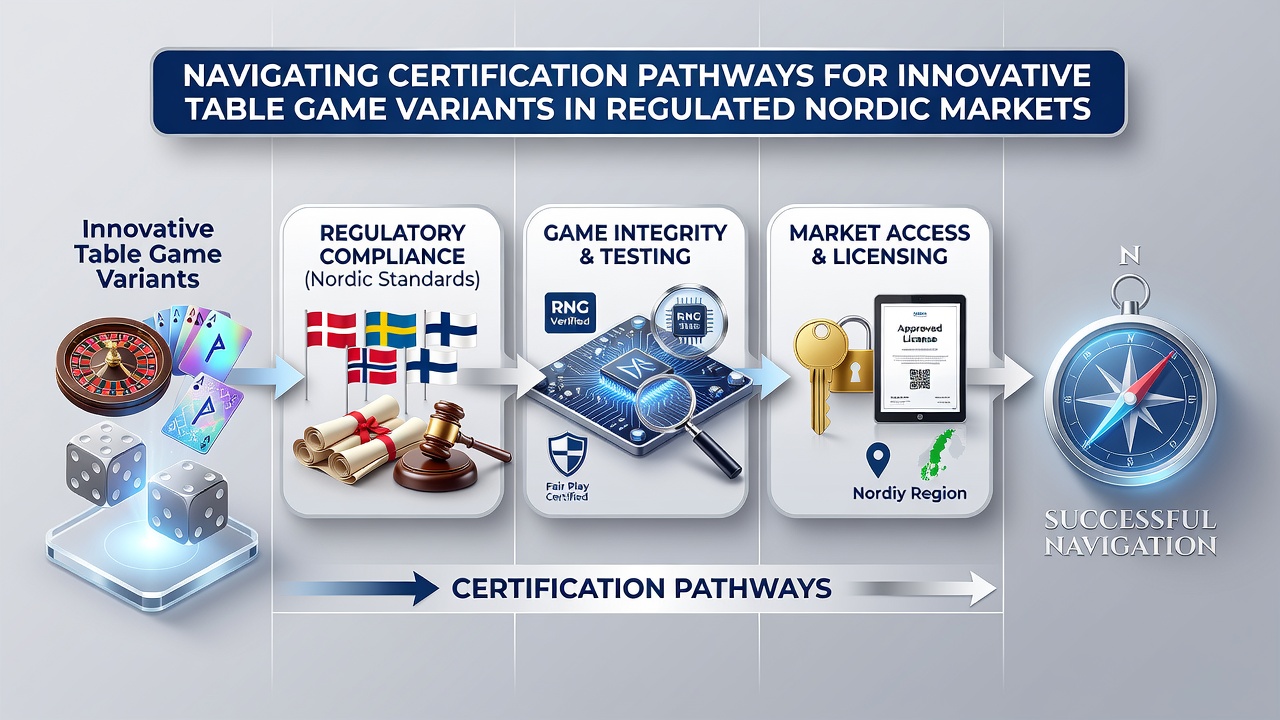
Certification typically starts when a developer or operator submits game documentation, source code, and payout calculations to a laboratory accredited by the relevant authority, and laboratories such as those recognized under European standards perform RNG audits along with statistical analysis of game outcomes. Once laboratory reports confirm compliance, the materials move to the national regulator for final review, a stage that includes verification that the variant fits within legal definitions of table games rather than resembling unauthorized slot mechanics. Applications often include player interface mockups and responsible gaming integrations because authorities examine how features like bet limits and session timers appear in the finished product. The entire sequence can span several months depending on the novelty of the variant and the completeness of the initial submission package.
Technical Requirements for Innovative Variants
Innovative table game variants must satisfy RNG certification, return-to-player calculations, and integration with centralized reporting systems that authorities use to monitor activity in real time, and these technical layers apply equally to live dealer hybrids and fully automated versions. Regulators examine whether new mechanics such as side bets or progressive elements alter the fundamental classification of the game, which can trigger additional review rounds. Research from academic institutions indicates that variants incorporating elements from multiple traditional games require extra scrutiny to ensure they do not inadvertently create new categories outside existing statutes.
Operators report that early engagement with regulators helps clarify expectations before full documentation is prepared, and several companies have established dedicated compliance teams that track guideline updates issued throughout the year. In November 2026 certain Nordic authorities are scheduled to release updated technical appendices that address emerging game types, and these updates will require re-certification for any variant already in the pipeline.
Common Challenges and Practical Considerations
Developers encounter repeated hurdles when variants introduce mechanics that blur lines between table games and other categories, and authorities have rejected submissions when mathematical models failed to demonstrate consistent randomness across all possible outcomes. Language requirements add another layer because all player-facing materials must appear in local languages, and this extends to rule explanations and help screens that testing labs must verify. Cost structures vary by jurisdiction, with laboratory fees and regulatory application charges accumulating quickly when multiple markets are targeted at once. Those who've navigated these processes note that maintaining detailed records of every test iteration simplifies responses to follow-up questions from regulators.
Recent Developments and Data Trends
Figures from national regulators show a steady increase in table game variant submissions since 2023, driven largely by demand for live dealer adaptations that incorporate player-choice elements previously limited to land-based venues. According to information published by the Nordic Council of Ministers, coordinated efforts among member states aim to harmonize certain testing protocols without removing national authority over final approvals. Industry associations such as the European Gaming and Betting Association have published summaries of certification timelines that help operators plan product launches around regulatory calendars. Nordic Council of Ministers reports and data releases from individual authorities provide the most current statistics on approved versus rejected applications.
Conclusion
Navigating certification pathways for innovative table game variants in regulated Nordic markets requires systematic preparation, coordination with accredited laboratories, and alignment with each country's specific legal definitions and technical standards. Operators that maintain ongoing dialogue with regulators and track scheduled guideline updates position themselves to complete the process more efficiently when new variants are ready for review. Continued growth in submissions suggests that demand for differentiated table game experiences remains strong, provided those experiences satisfy the evidentiary thresholds set by the relevant authorities.